
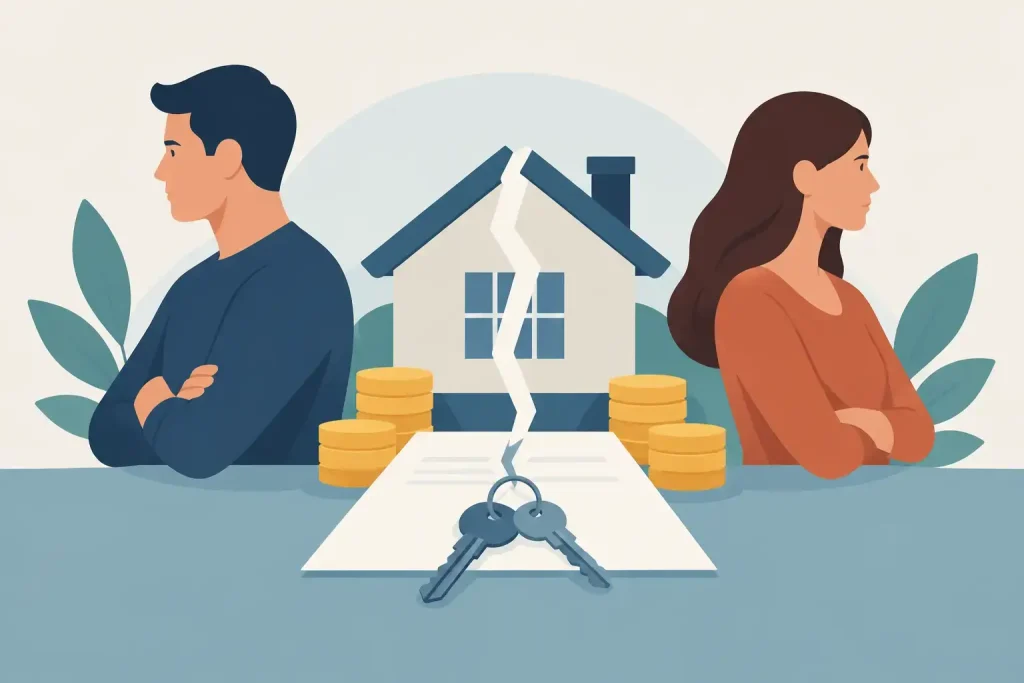
A joint loan can feel like one more thread tying you to a life you are trying to untangle. If you are asking what happens to joint loans during divorce, the short answer is this: both borrowers generally remain responsible to the lender until the loan is paid off, refinanced, or otherwise formally changed. A divorce agreement can assign responsibility between spouses, but it usually does not change the lender’s contract.
That distinction matters. If your former spouse misses a payment on a jointly held mortgage, auto loan, personal loan, or line of credit, your credit may be affected too – even if the divorce decree says they were supposed to pay it. Understanding the difference between a marital settlement and a loan obligation can help you make decisions that protect your financial future.
What happens to joint loans in divorce?
When two people sign for a loan, each person is typically fully responsible for repayment. This is often called joint and several liability. In practical terms, the lender can look to either borrower for the full payment if the account becomes delinquent.
During divorce, you and your spouse may agree that one person will keep the house, car, or other asset connected to the debt. Your settlement may state that the person keeping the asset must make the payments and, in some cases, refinance the debt by a particular date. Those terms are meaningful between the two of you. They can provide a basis for enforcement if one spouse does not follow the agreement.
But a lender is not generally bound by the terms of your divorce decree. The lender did not sign that agreement. Until your name is removed from the loan through refinancing, payoff, assumption approved by the lender, or another formal process, the account can remain on your credit report and you can remain financially exposed.
This can be an unwelcome realization, especially when you have worked hard to reach a settlement. It is also a reason to treat debt decisions as central financial decisions, not as details to address after the larger property questions are settled.
Different joint loans create different risks
The right path depends on the type of debt, the value of the asset, each person’s income and credit, and the timeline for the divorce. A mortgage may require a more detailed analysis than a joint credit card balance, but the core issue remains the same: who has legal responsibility now, and what will remove that responsibility later?
Joint mortgages
A jointly held mortgage is often the most consequential shared debt because it is large, long-term, and connected to the family home. If one spouse keeps the home, refinancing the mortgage into that person’s name is often the cleanest solution. The refinance pays off the existing joint loan and replaces it with a new loan in one borrower’s name.
Still, refinancing is not automatic. The spouse keeping the home must qualify based on income, debt, credit, and the lender’s underwriting requirements. Current interest rates and the home’s equity also affect whether refinancing is realistic or affordable.
Some loans may be assumable, meaning one borrower may be able to take over the existing mortgage with lender approval. This can be valuable when the existing interest rate is favorable, but eligibility rules apply and the lender must formally release the departing borrower. Do not assume that simply transferring the home’s title removes someone from the mortgage. Title and debt are separate matters.
If refinancing or assumption is not feasible, selling the home may be the financially safer choice. That can be emotionally difficult, particularly when children are involved, but holding onto a home with an unaffordable payment or unresolved joint liability can create a larger problem later.
Vehicle loans
When one spouse keeps a vehicle, that person should ideally refinance the auto loan solely in their name. If that is not possible, consider whether selling the vehicle and paying off the loan is a better alternative. A vehicle can lose value quickly, and a joint loan on a car your former spouse controls leaves you dependent on their payment habits.
Transferring the vehicle’s title alone does not necessarily release the other borrower from the loan. Confirm the lender’s process before assuming the account has been resolved.
Personal loans, home equity loans, and lines of credit
Unsecured personal loans and home equity debt may be easier to overlook because there is no visible asset attached to a monthly statement. Yet they can be especially risky after separation. If one person stops paying, the other may face collection activity, credit damage, or pressure to make payments on debt they no longer benefit from.
A home equity line of credit deserves particular attention. If the line remains open and both spouses can access it, new borrowing could increase the balance after separation. Ask the lender whether the account can be frozen, closed, paid off, or refinanced as part of the transition.
Joint credit cards
Joint credit cards and authorized-user arrangements are not the same. A joint account holder is generally responsible for the balance, while an authorized user may not have the same contractual obligation. Review each account directly with the issuer rather than relying on labels used casually within the household.
For true joint accounts, closing the account to new charges does not eliminate the existing balance. You still need a repayment plan. For authorized-user cards, removing the authorized user can prevent future spending, though it will not resolve prior charges or other shared debts.
Do not rely on a promise to refinance later
A settlement provision requiring your spouse to refinance within a year or two may sound reasonable. Sometimes it is the only workable option. But it should be evaluated against the real likelihood that refinancing will happen.
Ask practical questions: Does the spouse who will keep the loan have enough documented income to qualify? Is their credit likely to support approval? Will spousal support or child support be considered by the lender, and under what conditions? Can they afford the payment if rates are higher when they apply? What happens if the deadline passes without a refinance?
A clear agreement may include a specific deadline, required proof of loan application or approval, responsibility for payments until the debt is resolved, and a defined next step if refinancing fails. That next step could be selling an asset, paying down debt from other funds, or returning to the negotiation table. Your attorney can advise you on the legal language and remedies available in your state.
From a financial standpoint, avoid accepting a future refinance as a certainty when the numbers do not support it today. A plan is stronger when it includes a realistic backup option.
Steps to take before finalizing a divorce settlement
Start by creating a complete debt inventory. Pull credit reports, gather recent statements, and list every account with both names attached. Include the current balance, interest rate, monthly payment, due date, whose name is on the loan, and what asset or expense the debt relates to.
Then separate the question of ownership from the question of liability. You may agree that one person keeps the home or car, but you also need to identify how and when the other person will be removed from the related debt. If removal is not possible immediately, decide how payments will be monitored and what protections are available during the interim.
It can also help to run a post-divorce cash-flow plan for both households. The spouse keeping a home may technically qualify for a mortgage refinance but still have very little room for repairs, child-related costs, retirement saving, or an emergency fund. A decision that works on paper at closing may not be sustainable six months later.
Keep careful records once an agreement is in place. Save payment confirmations, lender correspondence, refinance applications, payoff statements, and any communication related to the debt. Check your credit reports periodically so you can identify missed payments or unexpected balances promptly.
Protecting your credit while the loan is still joint
Until a joint account is resolved, stay informed. Confirm due dates and account balances, and do not assume that a payment was made simply because your former spouse said it was. Where appropriate and permitted, maintain access to account information and set up alerts for payment activity.
If you must make a payment to prevent delinquency, document it. You may have rights under your divorce agreement, but preserving your credit can be the more urgent priority in the moment. This is frustrating, particularly if the debt was assigned to your former spouse. Still, a late payment can affect your ability to rent a home, obtain financing, or rebuild independently.
A divorce financial professional can help you assess the trade-offs of keeping, refinancing, selling, or paying off debt in the context of your full financial picture. At Turning Tides Divorce, that work centers on helping you see the immediate obligation alongside its long-term effects on cash flow, taxes, retirement, and financial independence.
You do not need to solve every loan issue alone or make decisions under pressure without understanding the consequences. Ask for complete information, insist on realistic timelines, and make sure your next financial chapter is not dependent on a debt you thought was behind you.